
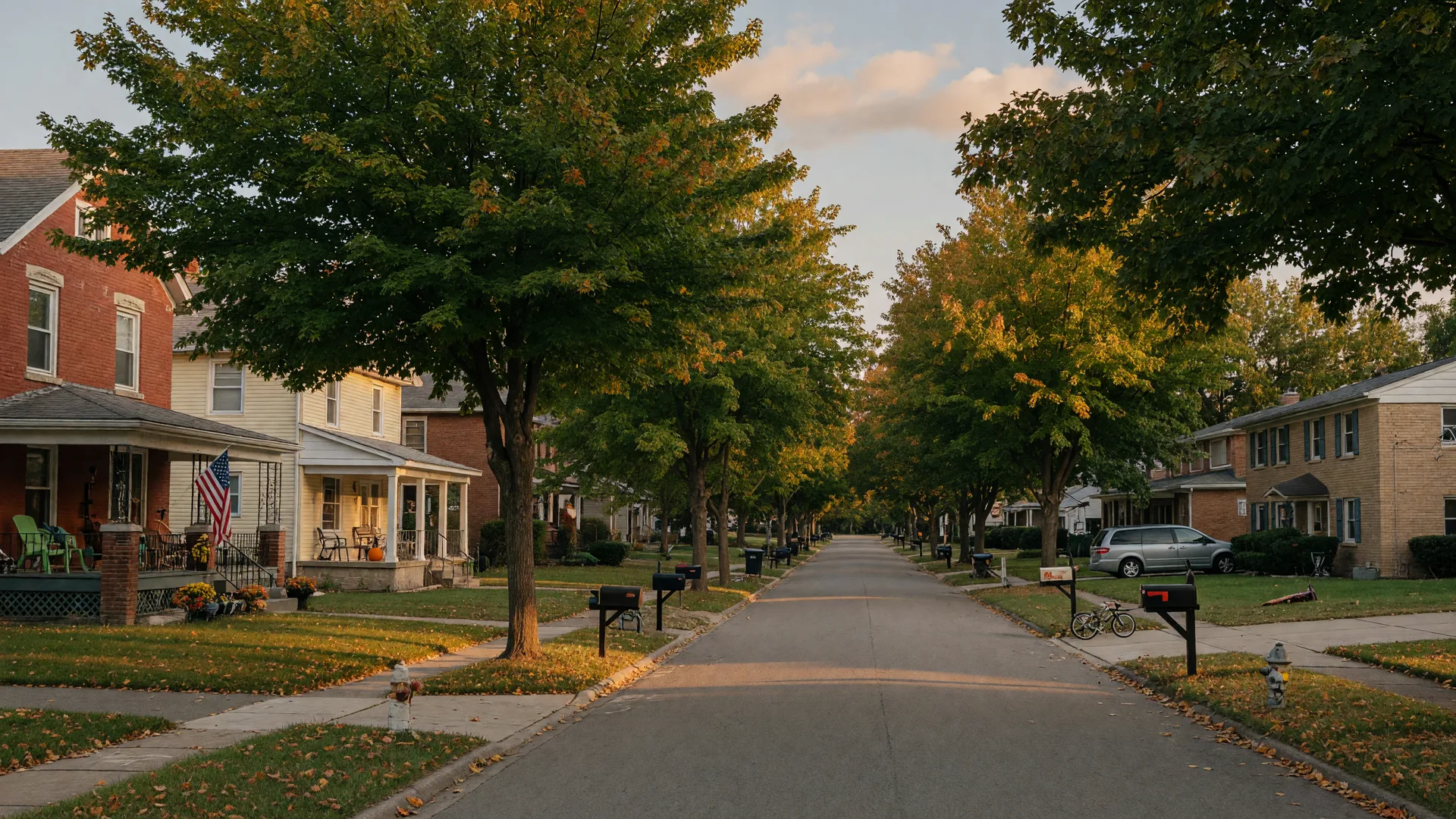
What Northeast Ohio Really Costs in 2026.
The numbers a mover actually asks about: how Cleveland, Akron, and Medina compare to the national average, what homes cost county by county, the taxes that come with an Ohio address, and what your budget buys at the end of the month.
Northeast Ohio is one of the most affordable corners of the country to call home, and the numbers back it up. Published 2026 cost-of-living indexes put Ohio roughly 10 percent below the U.S. average, with housing doing most of the heavy lifting. The Cleveland and Akron metros both run below the national average, while Medina County and the region's strongest school districts land at or slightly under it, a mix of price and quality that keeps families coming back.
This guide walks the real figures: median prices by county, the taxes attached to an Ohio address, and what a typical month of groceries, utilities, and transportation run. Use the county table as your map, the tax cards as your planning list, and the buying math as your reality check before you set up a tour.
The Big Picture: Ohio Measured Against the Country.
Cost-of-living indexes set the national average at 100. Ohio scored near 90 for 2026, roughly 10 percent below the country overall. The real story is inside that number: housing, the largest line in most budgets, runs far cheaper than the rest of the country, while some taxes run a bit higher. Here is how the region stacks up.
Published 2026 cost-of-living indexes put Ohio near 90 on the scale where 100 equals the U.S. average. Housing is the single biggest reason.
Housing costs in Ohio score among the lowest in the country on the same index, which makes the monthly payment, not the sticker, the real story.
Most 2026 estimates for the Cleveland metro land between 7 and 10 percent below the national average, with home prices the largest contributor.
The Akron metro tends to show the deepest discount of the region's three big metros, driven by some of the most affordable housing around.
County by County: What Homes Cost in 2026.
Median sale prices are the fastest honest read on a market, and each county tells a different story. The figures below are representative 2026 medians drawn from published county market data. Within every county, communities and school districts spread wide: lakeshore villages, city neighborhoods, and bedroom suburbs all sit far from the county line.
Where the Community Ranges Land
Within each county, the spread is the whole game. These representative ranges come from the site's full community price table, which is updated as listings turn over:
Taxes: The Part That Changes Take-Home.
Housing is the discount, and taxes are the honest offset. Ohio keeps income tax low in 2026 while leaning on property tax more than many states, and that trade-off shows up in a monthly budget. Three layers shape most households: the state income tax, local income taxes, and property tax on your home.
State income tax
Ohio taxes nonbusiness income at a flat 2.75% in 2026, with the first $26,050 of taxable income falling in a zero bracket. For most households that is a modest, predictable check on take-home pay, and there is no retirement-income tax on those earnings.
Local income tax
The city you live in and the city you work in can each levy a municipal income tax, typically 1 to 3%, with credit rules that usually keep the same income from being taxed twice. About 200 Ohio school districts also add a district income tax of 0.5% to 2%, so the district you buy into matters on the paycheck side too.
Property tax
Ohio effective residential property tax rates run roughly 1.36% to 1.6% of home value, above the national average of about 1.05%. On lower home prices, the annual bill can still be smaller than in a coastal metro, but it is the most region-specific number to build into a monthly estimate.
Planning note: school district levies and city income rates are public record, and your lender will estimate the property tax escrow from the county auditor rate sheet. Run both before you choose a neighborhood, not after.
Everyday Costs: Groceries, Utilities, and Getting Around.
The big-ticket savings is the home itself; everything else tracks at or slightly below national norms. Your seasonal wildcard is winter utilities: budget for higher utility months and warmer coats, and the numbers stay friendly.
Groceries
Grocery prices across Northeast Ohio generally run at or slightly below the national average on published indexes, and the region's farmers markets keep summer produce inexpensive from June through October.
Utilities
Gas heat keeps winter bills moderate across Northeast Ohio, while electric heat and poor insulation cost more. Budget for higher utility months from December through February, and ask about energy costs on any older home you tour.
Transportation
Gas prices track the region's norms, and the real cost is the daily route: I-71 to Cleveland and I-77 to Akron are the commuter backbones, so a 25-minute drive is the trade-off buyers accept for bigger yards and lower prices.
A working estimate: one 2026 published estimate for the Cleveland metro put the typical month at roughly $2,400 for a single adult and about $5,200 for a family of four. Treat those as planning figures, not promises. Your largest variable is the home you choose.
How Far Your Money Goes: The Buying Math.
At the mid-6% mortgage rates of late 2026, a $250,000 home with 20% down leaves a $200,000 loan and a principal-and-interest payment near $1,265 a month, before property tax and insurance. In the national-average market, the same payment buys a much smaller home in most metros.
The savings buy lifestyle, not just square footage: the Cleveland and Akron metroparks, Lake Erie shoreline, top-rated school districts, and a community calendar full of community events within an hour of home. Families relocating from higher-cost states often see their largest line, housing, drop by a third or more.
Want the school side of the equation? Our 2026 school district guide pairs these price points with the districts that serve them, and the relocation guide walks the moving basics step by step.
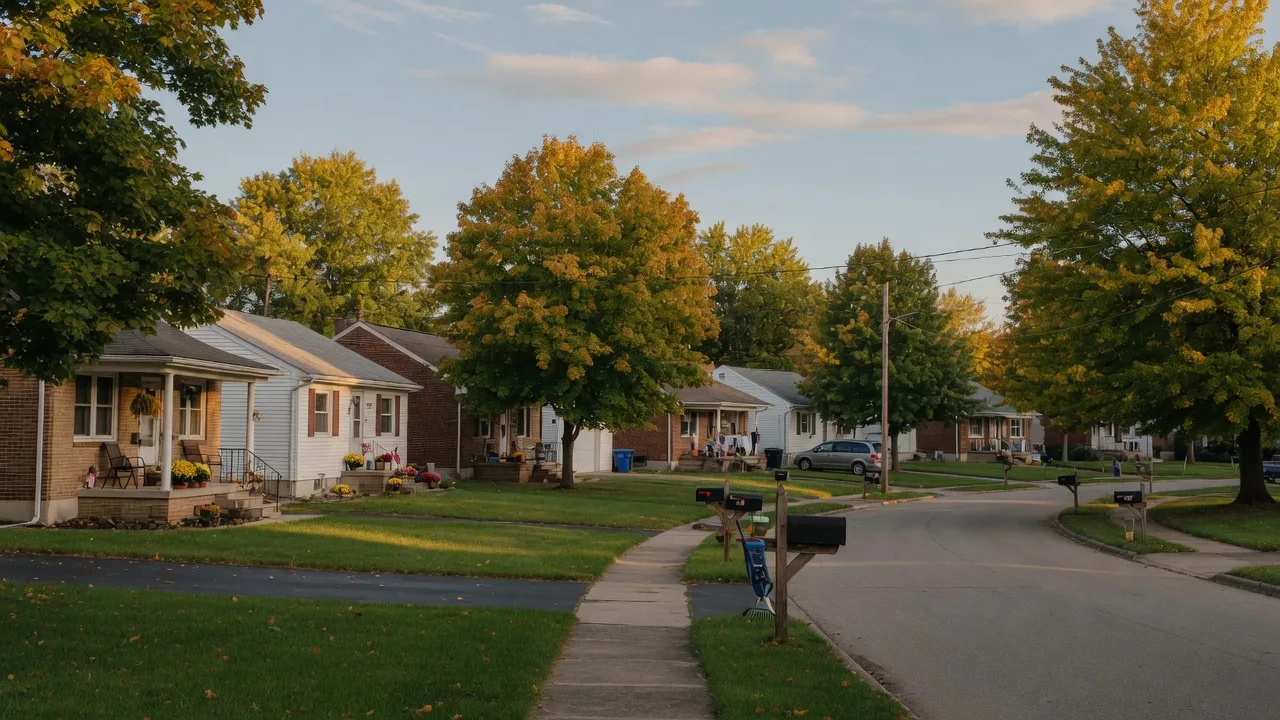
Cost of Living Questions, Answered.
Is Ohio actually cheaper to live in than the national average?
Yes. Published 2026 indexes put Ohio roughly 10% below the U.S. average, and housing is the main driver: Ohio scores among the lowest in the country on housing cost. The discount is not uniform: the Cleveland metro runs about 7 to 10% below average, the Akron metro 10 to 15% below, and Medina County sits at or slightly under the national average while running above the Ohio state average.
Why is Medina more expensive than the rest of Ohio?
Medina County is the affluent exurb of the Cleveland-Akron corridor. Its school districts are consistently rated among the best in the region, and its location between I-71 and I-77 makes it an easy commute to both cities, so demand stays strong. Even at roughly 7% below the national average on cost-of-living indexes, that premium still lands below what comparable school districts would cost in most other states.
What taxes will I pay living in Ohio?
Three layers matter most. Ohio income tax is a flat 2.75% on 2026 income above a $26,050 zero bracket. Your city of residence and workplace may add municipal income taxes of 1 to 3%, usually with credit for taxes paid to the other city. Property tax effective rates run roughly 1.36% to 1.6% of home value, above the national average, though the lower purchase prices keep annual bills manageable.
Are groceries and utilities cheaper in Northeast Ohio?
Generally yes. Groceries, utilities, and transportation track at or slightly below national averages on published indexes. The genuinely large savings is housing: the Cleveland metro median near $250K compares with a national median in the high $300s, and that gap is what makes a monthly payment work for a typical family.
How much home can I buy in Northeast Ohio?
At the mid-6% mortgage rates of late 2026, a $250,000 home with 20% down leaves a $200,000 loan and a principal-and-interest payment near $1,265 a month, before property tax and insurance. County medians in 2026 run from about $195K in Summit County to about $330K in Medina County, so the payment range follows the community you choose more than the region itself.
Which is cheaper, Cleveland or Akron?
The Akron metro tends to show the deeper discount, roughly 10 to 15% below the national average, with a county median near $195K. The Cleveland metro runs about 7 to 10% below average with a county median near $234K, though its suburbs span from well under the county number to Solon and Brecksville price points. The honest answer is that both metros are affordable by national standards, and the right choice is the community, not the city line.
The Real Estate Side of This Math.
For buyers, the affordability edge is straightforward: with mortgage rates holding in the mid-6% range and prices still well below the national median, a monthly payment that is ordinary here buys a dramatically different home in most other metros. Sellers, meanwhile, are negotiating from a position of strength in the region's strongest districts, especially Medina, Solon, Brecksville, and Hudson, where inventory stays tight.
The county medians in this guide are the starting line, not the finish line. Within each county, the spread between communities runs wide, which is exactly why a local read on an address, a school district, and its tax rate matters more here than it does in a uniform market.
The county medians and community ranges above are the starting line. A local agent can run the real numbers for a specific community, a school district, and a budget. Our fall market update and the first-time homebuyer guide build on the same numbers this guide opens with.
Curious what your budget buys here?
Whether you are relocating for work, moving home, or sizing up a first purchase, a cost comparison for the communities you are weighing is a free conversation. Bring your numbers and a wish list.
Jamie Steinbacher is a Certified Relocation Professional® (CRP®) and Military Relocation Professional® (MRP®) serving all of Northeast Ohio, and Team Steinbacher has been recognized by RealTrends as a Top 1% real estate team nationwide for 10+ years.